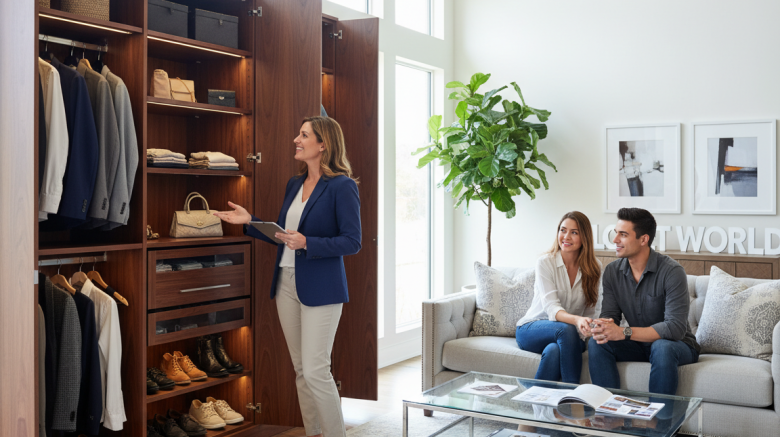
Seventy percent of homeowners say clutter interferes with their daily routine — yet most do not think about a professional solution until frustration builds up. If you want a lasting change, custom closet design and installation turns crowded shelves into organized, practical storage designed around how you live.
Storage Systems For Closets
Closet World is a national closet company that brings regional knowledge to your home. You’ll work with a trained storage specialist who provides a complimentary planning session, precise 3D renderings, and a clear plan for closet design installation.
The process is simple: a designer reviews your needs, local manufacturing produces the components, and certified installers finish the custom closet services from start to finish. Whether you need a small closet upgrade or a full walk-in remodel, custom closet design and installation creates organization that fits your life.
In this article, you’ll learn the advantages, the step-by-step process, materials and finishes, typical pricing, timelines, and real-life before-and-after projects. This will help you find trusted closet design services and local specialists near you.
- Custom Closet Planning And Installation provides tailored storage that reduces daily clutter.
- Closet World pairs professional closet designers with local manufacturing and certified installers.
- The full-service approach covers consultation, 3D design, manufacturing, and installation.
- You’ll see options for materials, hardware, pricing models, and realistic timelines.
- Thoughtfully planned closets enhance functionality and long-term home value.
Why Custom Closet Design And Installation Is Worth It
Clutter steals time. Studies reveal the average American spends over a year searching for misplaced items. Custom closets and professional design create structure, saving hours and reducing stress.
How Tailored Storage Saves Time And Stress
Tailored closet storage gives a home to every item. Shoes, jewelry, and seasonal coats have their place. Closet specialists optimize hanging heights and shelf depth, speeding up your routine and protecting your clothes.
Long-Term Value And Better Home Functionality
Built-in closet solutions offer lasting upgrades. They enhance space, improve room functionality, and attract buyers who value organization. Investing in quality materials and design supports home value and enhances daily use.
Why Custom Solutions Beat Off-The-Shelf Organizers
Mass-market systems can be limiting in size and design. Custom solutions, tailored to your space, offer precise shelving and hanging layouts. Features like pull-out racks and jewelry trays add practical function and long-term strength, absent in mass-market options.
Collaborating with reputable companies or local specialists ensures a fit for your lifestyle. This level of planning changes closet space into a lasting, efficient home feature.
How Closet World Creates Your Custom Closet
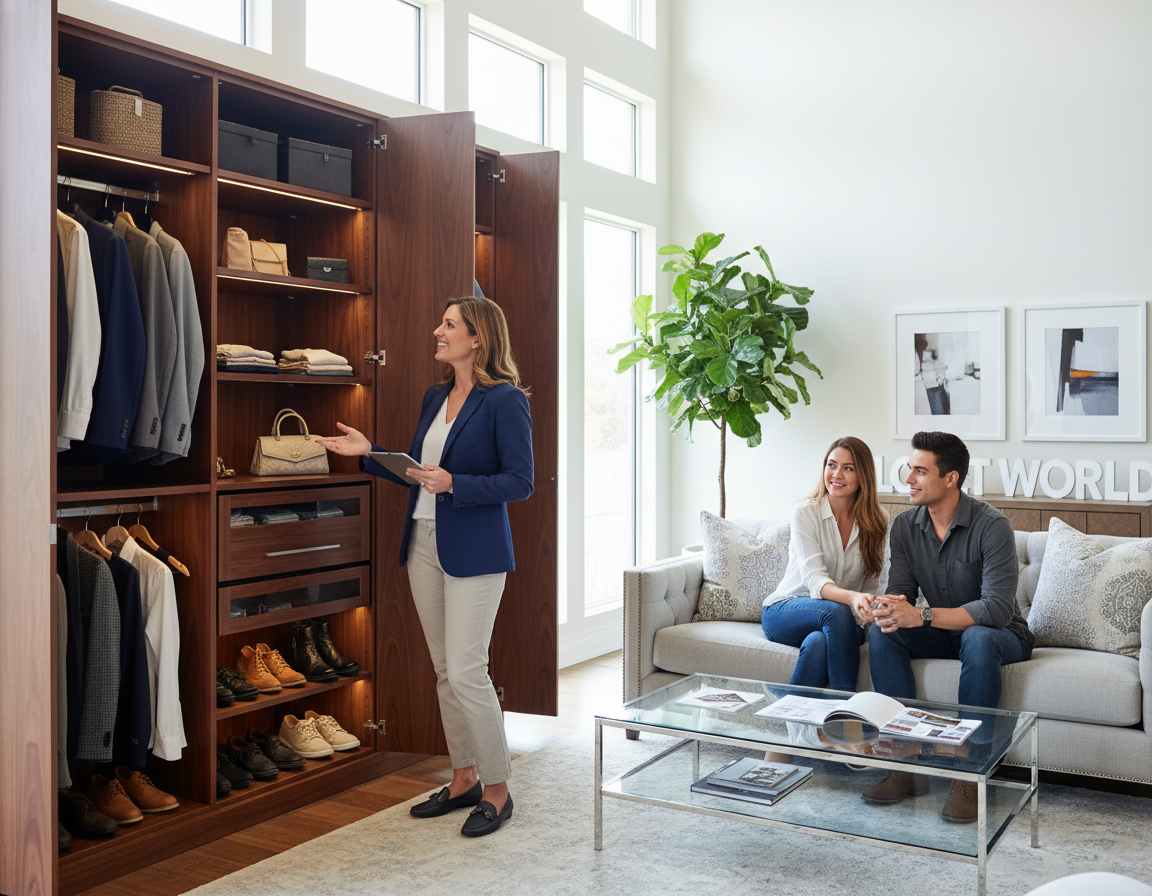
Working with Closet World begins with a client-first approach. A professional designer will schedule a free in-home design consultation. They measure your space, understand how you use it, and bring samples for you to compare.
Free In-Home Consultation With 3D Renderings
Your in-home visit is a detailed assessment of your space. The designer notes dimensions, traffic flow, and storage needs. They capture photos and create full-color 3D renderings for you to review.
These visual plans let you approve or make changes to the plan. You can confirm the layout, finishes, and accessories. This ensures no surprises during installation and speeds up the process.
Local Manufacturing And Quality Control At Closet World
Closet World works with local manufacturers and operates climate-controlled workshops. They use CNC production lines for cutting and finishing parts. This approach shortens lead times and reduces transport damage.
All components go through quality checks before leaving the factory. You benefit from consistent quality and, when possible, eco-friendly materials. These meet modern durability and finish standards.
A Trusted Full-Service Process From Design To Installation
The workflow moves from 3D design to pre-production engineering, then to factory build. Once parts pass quality control, a trained installer schedules your site install.
Experienced installers follow trusted company standards, following strict checks. Most standard closet installations finish in a single day. This full-service approach keeps everything under one roof, simplifying communication for you.
Types Of Custom Closets And Closet Services Offered Near You
As you compare closet services, you can tailor them to your home and lifestyle. Local companies specialize in designing systems for any space size. They offer everything from elaborate custom walk-in closets to efficient reach-in solutions.
Custom walk-in closets can include high-end built-ins with various hanging zones, drawers, and storage for shoes and accessories. Adding an island or bench can enhance functionality. These custom closets come at a premium due to their extensive customization and use of top-quality materials.
Smaller reach-in systems are created for smaller spaces. They utilize smart layouts with dual rods, shelving, and drawers to optimize storage. For those without built-in options, wardrobe closets or freestanding units are available. Custom built-ins, being part of the home’s structure, offer greater durability than freestanding pieces.
Specialty closets cater to specific storage needs. Features like angled shelves, pull-out shoe racks, and tiered displays enhance shoe storage. Jewelry trays, inserts, and organizers for ties and belts keep small items organized and accessible. Custom closet organizers can also accommodate seasonal changes and garment care in a dedicated wardrobe closet.
Storage solutions extend beyond bedrooms with room-specific systems. Pantry, laundry, home-office, mudroom, and garage storage are all within the scope of custom closet services. These tailored solutions enhance organization throughout the house while maintaining a unified look.
Selecting Closet Materials, Finishes, And Hardware
The selection of materials is critical in determining the aesthetic and functional aspects of your custom closet storage systems. It influences the color palette, moisture resistance, cost, and maintenance requirements. Below, we provide a detailed comparison and practical advice to guide you in choosing between wood, laminate, melamine, and wire options.
Comparing material types
Wood-style closet systems, including solid wood, plywood, or MDF, offer a premium look and exceptional durability. They are ideal for high-end closets and custom cabinets where a fine finish and paint or veneer are desired.
Laminate closet panels and melamine systems offer a wide range of colors and textures at a lower cost. They are more resistant to moisture than raw wood, making them suitable for laundry or pantry-adjacent closets. These surfaces come in matte and gloss finishes and can be paired with edge banding for a polished appearance.
Wire closet systems are budget-friendly and offer good ventilation. They are suitable for utility spaces or casual storage needs. While they may lack the refinement for delicate garments, they are a good choice where airflow is important. They may require occasional tightening.
Closet finish and hardware options
Opt for painted or veneer finishes for a personalized look. Matte laminates are great for hiding fingerprints, while gloss laminates can brighten small spaces. Edge banding in PVC or wood veneer completes the look of factory-quality panels.
Hardware details like knobs, pulls, and sliding-track components, is essential. Popular finishes include brushed nickel, chrome, black, and brass. Adding soft-close and smooth-glide drawer slides enhances the premium feel. Full-extension slides ensure easy access to the back of drawers in any closet cabinet organizer design.
Built-in lighting trims and LED strips enhance visibility. Ensure that metal tones match your door handles and faucets for a cohesive design.
Maintenance and durability considerations
Quality wood cabinetry and melamine panels handle daily wear and tear when cleaned with mild soap and water. Laminate is a better choice for humid areas like laundry or mudroom closets due to its moisture resistance.
Properly finished wire closet systems can resist rust. Regular checks on connectivity points are necessary. Ensure all shelving is anchored into studs or use heavy-duty anchors for stability.
| System Material | Ideal Use | Pros | Drawbacks |
|---|---|---|---|
| Wood closet systems including solid wood, plywood, and MDF | High-end bedrooms, walk-ins, built-ins | Elegant finish, strong construction, and refinishable surfaces | Higher upfront cost and moisture sensitivity without proper finishing |
| Melamine and laminate closet systems | Laundry-area closets and value-focused upgrades | Durable against moisture, versatile in style, and budget-conscious | Low-quality edge banding may chip |
| Wire closet systems | Ventilated storage areas, pantries, and utility rooms | Affordable, ventilated, easy to install | Less elegant for garments and may require maintenance |
| Closet custom cabinets (factory-built) | Custom layouts with guaranteed QC | Reliable finish, exact tolerances, and long life | Lead times can be longer, higher upfront cost |
As you plan, think about your daily needs and local climate. Discuss warranty, factory quality control, and the closet hardware with installers. Making informed decisions ensures your custom closet storage systems remain attractive and reliable for years.
How Professional Closet Installers Work: Preparation To Completion
The process begins with a thorough site assessment and precise measuring. A professional closet installer will meticulously measure from floor to ceiling and wall to wall. They note the location of outlets, vents, and any sloped ceilings. They also confirm if any walls can bear weight.
Professional crews rely on laser measures and specialized tools to ensure the dimensions align with the design. This step is critical to avoid any unexpected issues during the construction phase.
Prior to mounting components, the team prepares your space. Closet installers remove any existing shelving and hardware. They then patch up wall holes and clear out debris. This allows them to work efficiently without any obstructions.
You may be asked to clear out the area before the crew arrives. This ensures they can work quickly and maintain a clean workspace.
Next, the team checks safety and wall strength. A professional closet installer will locate studs and test the wall’s strength. They plan the placement of anchors for heavy loads. If necessary, they use heavy-duty anchors and follow strict weight-testing protocols to meet building codes.
The closet installation service then follows a series of methodical steps. First, they mount the wall rail system with laser-level precision. Next, they slide vertical supports into pre-cut notches and secure them to the rail and studs.
After verifying that supports are plumb and level, they install hanging rods and shelving. Drawer boxes are fitted with smooth-glide hardware and anchored into the framework. Accessories such as shoe racks, dividers, and lighting are added last, ensuring each module is secure.
As the work continues, crews perform staged weight testing and continuous quality checks. This ensures the closet’s durability and stability.
Once the installation is complete, the team conducts a final inspection and clean-up. They walk you through the completed system, demonstrating how to use the hardware and providing care tips. This final review ensures you are satisfied with the installation and confident in its long-term performance.
Custom Closet Accessories That Maximize Utility
Adding the right accessories to your closet transforms unused space into valuable storage. Specialized shoe storage and flexible shelving ensure you can find what you need quickly. Designers blend functionality with style, making your closet both useful and visually appealing.
Shoe Racks, Angled Shelves, And Pull-Out Shoe Systems
Slanted shoe shelves provide visibility and air circulation for your footwear. For deep closets, pull-out shoe systems are ideal, providing easy access. Enclosed cabinets protect your designer shoes from dust while saving space.
Smooth-Glide Drawers, Jewelry Inserts, And Tie/Belt Organizers
Drawers with smooth-glide slides maximize space by allowing full use of the drawer depth. Jewelry inserts and felt-lined compartments safeguard your jewelry from tangling. Tie and belt organizers, along with pull-out valet rods, keep accessories organized and accessible.
Lighting Options, Hampers, And Motion-Activated Features
LED lighting beneath shelves lights up dark areas without generating heat. Motion-activated closet lights offer hands-free illumination when doors are opened. Hampers and laundry solutions keep clothes out of sight, simplifying laundry day.
| Closet Accessory | Best Use | Where To Place It |
|---|---|---|
| Angled footwear shelves | Easy viewing and fast access for daily shoes | Near the door on lower shelves for easy use |
| Pull-out shoe systems | Maximize deep or narrow spaces | Mid-level placement for reach; label by season |
| Covered footwear cabinets | Keep designer footwear dust-free | Upper cabinetry or separate shoe zones |
| Smooth-slide drawers | Folded garments, linens, and heavier items | Between eye and hip level for daily access |
| Jewelry drawer inserts | Protect and separate small valuables | Upper drawer with felt-lined compartments |
| Tie belt organizers | Keep belts, ties, and scarves accessible | Side panels or pull-out racks at waist height |
| LED closet strips | Even shelf illumination | Under-shelf mounts and along verticals |
| Motion-sensor closet lights | Touch-free illumination that saves energy | At entrances and darker closet areas |
| Concealed hamper systems | Simplify laundry organization | Low pull-out areas or covered cabinets |
Place often-used belongings at eye level for easy access. Store seasonal items on higher shelves. Designers suggest dual-hanging sections and adjustable shelving to accommodate changing needs.
Closet Installation Pricing, Budgets, And Expectations
Learning typical closet costs is essential to budgeting effectively and comparing quotes. Projects vary widely. Small reach-in systems start around $1,200. An 8-foot reach-in usually costs between $2,500 and $5,000. Walk-in closets and elaborate systems can range from $5,000 to $20,000 or more, based on size and accessories.
Material choices significantly impact the cost. Solid wood is at the high end. Laminate or melamine offers a balance of appearance and value. Wire systems are cheaper but less customizable. Extras like soft-close drawers, built-in lighting, or jewelry inserts increase the cost.
Installer labor and installation approach also affect pricing. Companies with in-house installers often provide clearer warranties and schedules. Those relying on subcontractors might be cheaper but less predictable. Local manufacturing can improve quality and slightly increase cost while reducing lead times.
Quotes may use per linear foot or per square foot pricing. Per linear foot prices range from $150 to $450, depending on materials and complexity. Per square foot prices range from $17 to $50. Request both to compare accurately.
Ask for a detailed estimate that breaks down materials, labor, and accessories. This allows you to identify cost-saving areas if needed. Prioritize essential features first. You can delay premium upgrades like built-in lighting to stay within budget.
| Closet Project Type | Usual Price Range | What Drives Cost |
|---|---|---|
| Compact Reach-In Closet | $1,200 to $2,500 | Basic shelving, laminate panels, simple hardware |
| 8-Foot Reach-In | $2,500 to $5,000 | Custom shelving, drawers, upgraded finishes |
| Typical Walk-In Closet | $5,000 to $12,000 | Multiple materials, drawer storage, shoes, and lighting |
| Luxury Walk-In Closet | $12,000 to $20,000+ | Solid wood, custom cabinetry, built-in islands, premium hardware |
| Linear Foot Estimate | around $150–$450 per linear foot | Material selection, complexity, accessory count |
| Pricing Per Square Foot | $17 to $50 per sq ft | Labor intensity, finish level, local market rates |
Before choosing a proposal, check clear exclusions and warranty terms. A transparent quote helps avoid surprises and gives you control over costs. If prices seem high, ask about phased solutions. Many installers can split work into stages to spread costs and improve storage gradually.
Finding And Vetting Local Closet Design Companies And Installers
Choosing the right closet design company requires careful consideration. Begin by clearly outlining your space and needs. This step helps in comparing estimates and timelines effectively. Seek out a closet design specialist who offers design consultations and realistic timelines.
Ensure the company provides free design consultations and 3D renderings. Confirm if their installers are employees or subcontractors. Inquire about warranty coverage, post-installation service, and typical lead times from order to install. Request references from recent projects to hear from actual homeowners.
Study project galleries and before-and-after images for projects similar to yours. Review Google and Yelp ratings for consistent feedback. Ask for customer testimonials and specific examples of walk-in, reach-in, or specialty closet work to verify experience.
When searching for a closet company near you, consider local manufacturing. Locally made systems can reduce lead times and enhance quality control. Many closet system manufacturers use CNC machinery in their local factories to produce consistent parts and speed up delivery.
As you review estimates, ask a closet design specialist to explain materials, hardware, and installation steps. Ensure the closet installation service outlines site prep, anchoring methods, and cleanup. Verify permits and insurance where required.
Look at multiple proposals from closet companies to judge value, not just price. Ask about installation schedules and how the team coordinates with builders or interior designers. A reliable closet installers team will provide clear timelines and realistic start dates.
Work with nearby specialists who can inspect your space and provide written estimates. Working with nearby closet system manufacturers often means easier communication, faster replacement parts, and better ongoing support. Local firms support community jobs and can respond faster when you need follow-up service.
Closet Installation Timeline And Project Management
Planning your closet project means setting a clear schedule and realistic expectations. The process includes an initial consultation, a 3D design phase, manufacturing, and the final installation. Understanding the closet installation timeline is key to coordinating trades and preventing delays.
The initial appointment and 3D design usually happen within days to two weeks. The lead time for custom closet manufacturing varies by company and local production capacity. Most firms estimate one to four weeks for standard builds.
Standard installs usually complete in a few hours or a single day. The use of pre-cut factory parts and organized crews enables quick installation for reach-in closets and simple walk-ins. Closet World’s full-service approach aims to streamline the process and minimize site disruption.
Larger projects and multi-room designs lengthen the timeline. Custom finishes, electrical work for lighting, or structural changes require additional time. Be prepared for longer install windows for such features.
Working around other contractors is essential to avoid rework. Schedule drywall, painting, and flooring before the closet install when feasible. Ensure that outlet and lighting placements align with your electrician and designer’s plans.
Utilize a shared timeline spreadsheet or calendar to track progress. Confirm delivery dates, installation day, and any necessary site prep several days in advance. Clear communication ensures a predictable lead time for custom closets and enhances project flow.
Safety, Anchoring, And Quality Checks During Installation
Prior to attaching hardware to the walls, a short safety brief is given. This brief ensures the crew and your home are protected. You can expect clear site protection, a well-equipped toolkit, and a pro who explains each step. This approach supports installation safety and boosts your confidence in the work.
Stud-finding is the first technical step. A professional closet installer uses electronic stud finders and confirmatory probing. They anchor rails and vertical supports into the framing whenever possible.
If studs cannot be used, teams select heavy-duty anchors rated for the anticipated load. Anchors are matched to material type and load capacity. This ensures shelving, rods, and drawers stay secure under use. Staged weight testing follows anchoring to prove stability.
Closet installers safety starts with personal protection. Crews wear protective eyewear, use stable ladders, and bring wall guards and drop cloths. This prevents damage. You will notice organized toolboxes with laser levels, impact drivers, and saws chosen for the materials in your home.
Choosing proper tools supports precision and safe work. Laser levels ensure plumb alignment. Impact drivers set fasteners without stripping. Material-specific saws reduce dust and give cleaner cuts. These choices reduce rework and improve installation safety overall.
The quality-check process begins during installation. Installers run continuous checks for component alignment. They confirm smooth operation of drawers and soft-close mechanisms. Small adjustments are made immediately to avoid follow-up visits.
The installation quality process finishes with a detailed final inspection. Your installer walks through each moving part and accessory with you. They demonstrate load-bearing elements and document a sign-off. Reputable companies leave written records and a contact for post-installation service.
Real-Life Transformations: Before-And-After Project Highlights
Imagine a closet changing from cramped to spacious. A case study shows an old, narrow space turned into a walk-in. It now boasts dual hanging zones, custom drawers, and shoe storage, doubling its capacity and protecting clothes.
The original closet measured just five feet wide, with a single rod and a high shelf. Post-remodel, it features a lower zone for shirts, an upper zone for long coats, and Closet World-style drawers. This design cuts dressing time in half and minimizes wrinkles.
Family-centered designs can maximize vertical storage and improve accessibility
For family closets, think vertically. Tall shelving and stacked drawers make the most of unused space. Kid-friendly heights and labeled zones help children find their belongings easily. Hampers and durable finishes withstand daily wear and tear.
The way organized closets enhance daily routines and property value
A custom closet can simplify mornings by reducing outfit search times. They also prevent garment damage with better storage. Neat, efficient closets are a major selling point for homes, increasing appeal.
Useful lessons from the closet remodel case study
- Taking advantage of vertical space doubled walk-in capacity.
- A custom closet remodel added protection and easy access for seasonal items.
- Smart family closet planning improved access for both kids and adults.
Final Thoughts
Choosing custom closet design and installation provides immediate benefits. With solutions from Closet World, you get layouts tailored to your needs. These layouts save time, reduce clutter, and streamline your daily routines.
High-quality closet design highlights durable materials and thoughtful accessories. These elements outperform generic options, adding long-term value to your home.
Moving forward is easy. Schedule a free in-home design consultation. You’ll receive a 3D rendering and a clear estimate based on your space’s size. Inquire about local manufacturing, installer credentials, and quality control measures to guarantee a reliable outcome.
A thoughtfully planned custom closet becomes a practical home improvement. It boosts both function and resale appeal. Visit Closet World to explore galleries, learn about professional design, and book your consultation. This way, your space will serve you better every day.